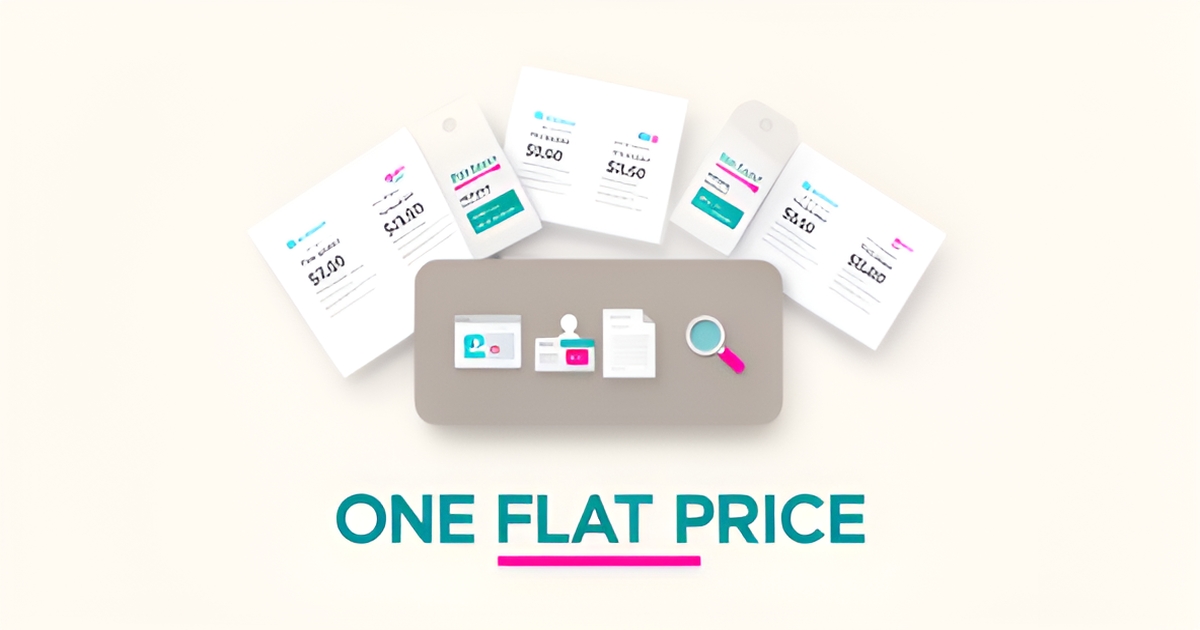
Why Small Service Businesses Are Rethinking the Per-Seat Software Bill
Per-seat pricing and add-on fees have turned small-business software into a second payroll. A new breed of flat-price, managed AI platforms is bundling the website, CRM, quotes, invoicing, and SEO into one system. Here's what to look for.
The dominant field-service platforms, including Jobber, Housecall Pro, ServiceTitan, and Workiz, built their pricing around seats. Every technician, estimator, or front-desk person you add costs more per month. Then the features you actually need to run a modern operation get layered on as paid add-ons: review management, document signing, pipelines, and marketing tools each carry their own line item. That model made sense when software was just a database with forms. It makes less sense now. When an AI system can draft a quote from a phone call transcript, send it, collect the signature, schedule the job, chase the invoice, and request the review afterward, the number of humans who need to sit in the software drops sharply. Paying per seat for work the AI is doing feels like paying a toll on a road you already built. There's also a fatigue factor that's harder to quantify but easy to observe. Owners who are excellent at their trade and miserable at software tell the same story: too many logins, too many dashboards, too many places where a lead can fall through a crack. The software was supposed to organize the business. Instead, the business now serves the software.
A newer approach treats the whole thing as one system, run for you rather than sold to you. AI Business Sites, a Halifax-based company built by AIQ Labs, is a clear example of the pattern. For $497 a month, with the $1,497 setup fee currently waived for a limited number of new businesses each month, a service business gets a custom website with 85 or more pages live within 7 days, plus the back office attached to it: a CRM, a chatbot, a voice agent on the site, an AI assistant, and a full quote-to-invoice loop for field work. The field-service piece is the sharpest contrast with the incumbents. The loop runs like this: a call comes in, the AI drafts a line-item quote from the transcript, the owner approves it from a phone, the customer signs it on a public page with no login, the job lands on the calendar, the invoice goes out with a card-pay link, and the review request follows payment. Nothing in that loop is a paid add-on. It's included, the same way the content engine (14 or more SEO pieces a month) and the SEO growth team are included. Only the outbound extras cost more: lead generation at $149 a month, cold outreach at $229, social content at $299, and a dedicated AI receptionist phone line at $199. Everything else sits inside the one price.
Underneath all the pricing debates sits a simpler problem: the phone. Most callers to a small service business don't leave voicemail anymore. If nobody answers, they call the next business on Google. For an owner who's on a job site with tools in hand, that's revenue evaporating in real time. Voice AI is the most direct answer to this that's appeared in years. An AI receptionist can answer around the clock, pull answers from the business's own documents, book appointments against real availability, and log a transcript and summary into the CRM. The website itself can carry a voice agent too, letting a visitor talk to it in the browser, ask questions, and become a lead mid-conversation. A customer who can order a pizza or book a haircut by talking to a website at 11 p.m. is a customer the business would otherwise never have spoken to.
Here's where small business owners should be skeptical buyers, whatever platform they choose. Ask what happens if you leave. Too many services hold your site, your content, and your lead data hostage the moment you stop paying. The better model is unambiguous ownership. Your domain is registered in your name. Your code, content, and data belong to you. If you cancel, you get the complete website code pushed to a repository in your name plus a full database export, built on standard open-source technology any developer can pick up. The right pitch is blunt: no contracts, month to month, and the company keeps your business by doing the work rather than by making leaving painful. Payments deserve the same scrutiny. When a platform runs your store or your job invoices through your own Stripe account, the money flows straight to you and the platform never touches it. You own the revenue relationship, not just the data.
One more shift deserves attention, because it's arriving faster than most owners expect. When a potential customer asks ChatGPT, Perplexity, or Google's AI Mode to recommend a local plumber, some business gets named and most don't. That recommendation is the new front page. Tracking it requires different tooling than classic SEO. Some managed platforms now include AI-citation monitoring alongside Google and Bing rank tracking, measuring how often the AI assistants recommend you versus your competitors, and steering content production toward the keywords and questions that actually drive those citations. For a small business, having this bundled into the monthly service rather than sold as a separate analytics product is a meaningful difference.