Why Small Businesses Are Ditching the Software Stack for an AI Operating System
The patchwork of website builders, CRMs, and chatbot widgets is quietly costing small businesses leads. A new done-for-you model replaces the whole stack with one managed AI system — website, content, quotes, invoices, and reviews included.
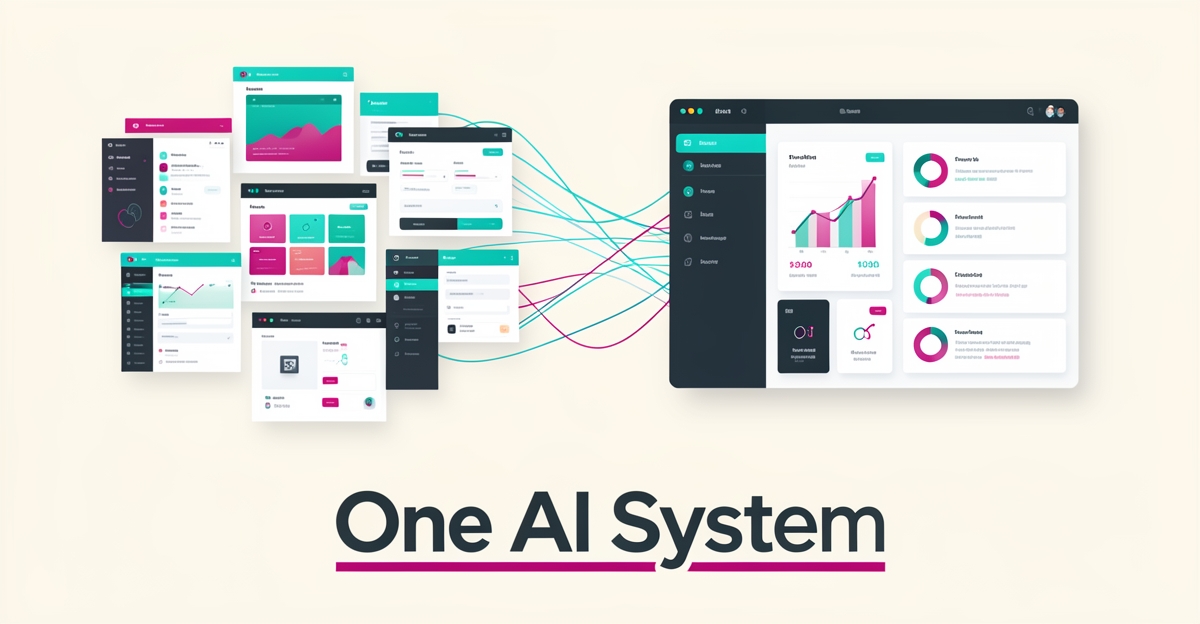
The typical small business technology stack has a hidden cost that never shows up on a single invoice. It shows up in the gaps. A customer calls while the owner is on a job site, and the call goes to voicemail — and most callers today do not leave one. They simply call the next business on Google. A lead fills out a contact form and waits hours for a reply that never comes. A quote gets emailed as a PDF and sits unopened for a week because nobody follows up. Reviews never get requested because the review tool costs extra or the owner forgets. Each of these gaps is small. Together, they are the difference between a business that grows and one that plateaus. The patchwork approach fails for a structural reason: the tools do not share context. The CRM does not know what the chatbot discussed. The invoicing app does not know the customer approved the quote. The content calendar exists in a spreadsheet nobody opens. What small businesses actually need is not more tools — it is one system where the pieces already know about each other.
This is the bet behind AI Business Sites, a service built by AIQ Labs, a small AI development team based in Halifax, Nova Scotia. Their approach is deliberately different from both DIY website builders and SaaS toolkits. For a $1,497 one-time setup fee and $497 per month, the team builds and runs the entire digital operation: a custom website with 85+ pages live within seven days of kickoff, plus an AI back office that handles the work most owners never get to. The setup includes 25 to 30 hand-crafted core pages, 60 AI-generated SEO pages covering services, locations, and comparisons, full Google Business Profile and Search Console configuration, chat and voice agents embedded in the site, a booking calendar, and a configured CRM. From there, the monthly service keeps everything running: hosting, maintenance, and a content engine that publishes 14+ new SEO pieces every month, plus daily industry news articles for the client's niche. The critical distinction is that nothing is handed over as software to learn. The client answers a short questionnaire at kickoff. The team builds, trains, and manages the system. The owner runs their business; the system runs the rest.
A common objection to AI-generated content is that it is shallow, unverified, and interchangeable. The platform's answer is architecture. Each piece of content passes through a pipeline of 12 specialized AI agents: one researches, one gathers statistics, one drafts, others verify claims, check citations, add schema markup, and format for search. The process is closer to a newsroom's production desk than a single chatbot prompt. Comparison pages — the 'X vs Y' and 'alternatives to' content that buyers actually search for — get an additional validation layer: every price and number is re-verified against scraped sources before publishing, and anything unconfirmed is labeled 'Contact for pricing' rather than invented. Every page publishes with an AI-generated featured image, sized and scored for Google Discover eligibility. The result is content that is consistent, sourced, and published on schedule — the three things small business content almost never achieves on its own.
For service businesses that quote and schedule work for a living, the platform's most significant differentiator is its Jobs and Estimates module — included in the monthly fee, not sold as a per-seat subscription. The loop works like this: a customer calls or chats with the site. The AI drafts a line-item quote from the conversation, which the owner approves from their phone. The customer opens a public quote page, sees good-better-best options that update the total live, and signs with a typed name — one tap, no login. The owner can see when the quote was opened. Approval automatically creates a job on the board, which lands on the calendar and on the technician's phone view with Start, On My Way, and Finish buttons that fire customer notifications at each step. The invoice goes out with a public pay page and card payment through the business's own Stripe account, with automated reminders on days three, seven, and fourteen. After completion, the AI drafts the review request for the owner's approval. Field-service software companies typically charge per seat and gate reviews, e-signature, and pipelines behind paid add-ons. Here, the entire loop — quote, job, schedule, invoice, payment, review — is one included system alongside the website and the content engine.
Perhaps the most unusual part of the offer, in an industry built on lock-in, is the exit. Clients own everything: the code, the content, the lead data, the knowledgebase documents, and the domain — registered in their name. The site is built on React and Next.js, standard open-source technology any developer can pick up. If a client leaves, the company pushes the complete website code to a GitHub repository in the name of the client and provides a full database export. Payments already flow directly into the client's own Stripe account, so the revenue relationship was never rented either. There are no long-term contracts — month-to-month, with 30 days' notice. The philosophy is stated plainly: keep customers by doing the work, not by trapping them. For owners who have been burned by platforms that held their website hostage, the ownership terms matter as much as the features.
For owners evaluating this category — whether AI Business Sites or a competitor — a few questions separate the real systems from the demos. First: who does the work? A platform that hands you software to learn is a project; one that builds, trains, and manages the system for you is a service. Second: what is actually included in the monthly price? Per-seat fees, gated review tools, and content add-ons multiply quickly. Third: who owns the assets? If the code, content, and data are not in your name, you are renting your own business. Fourth: how does the AI handle facts? Content that cannot source its claims is a liability, not an asset. And fifth: does the system close the loop — from first contact to paid invoice to public review — or does each step require another human to remember to do it? The businesses winning with AI in 2026 are not the ones with the most tools. They are the ones where the tools are already connected, already working, and already managed.